"The rules of consumption are changing": Miami hosts key summit on artificial intelligence
The CEO of Grupo Ohla explains to DIARIO LAS AMÉRICAS how the Latin Consumer Summit will bring together industry leaders to rethink strategies in an environment marked by digital uncertainty.
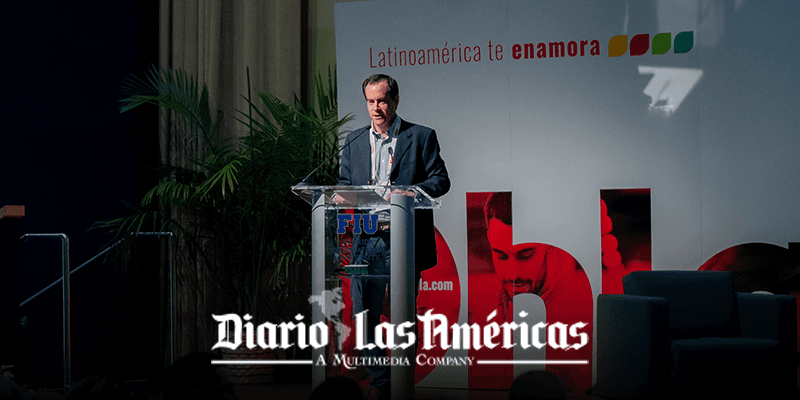
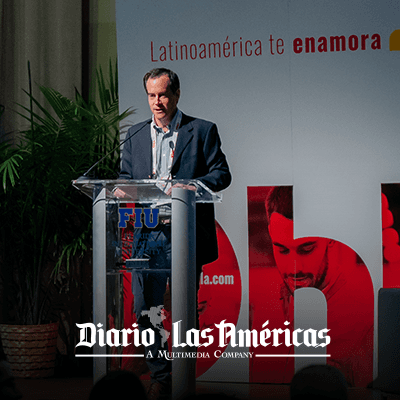
MIAMI. – “Artificial intelligence is no longer theory: it is directly changing businesses.” With that premise, Antonio Monckeberg, executive director of Grupo Ohla, defines the focus of the fourth edition of the Latin Consumer Summit, which will be held on May 14 and 15 in Miami.
In an interview with DIARIO LAS AMÉRICAS, the executive warns that the sector is going through one of its most complex moments, where the speed of technological advances has left behind many of the traditional planning models.
“Today it is very difficult to project based on market research or consultancies. The best way to understand what is coming is by listening to those who are making decisions in real time,” he says.
The event will focus on concrete experiences within the industry. More than 25 high-level executives will share practices, adjustments, and lessons learned in a format that prioritizes direct exchange, alongside an audience of around 500 participants.
“We are looking for a space where executives can compare what is working, what has stopped working, and how they are adapting,” he points out.
As he explains, one of the main contributions of the meeting is to offer more clarity in an environment where companies are looking to define their roadmap for the coming years.
“Companies arrive with many questions about how to plan for 2026 and 2027 in a scenario of high uncertainty.”
The model, moreover, is collaborative. Speakers participate without fees, which strengthens the quality of the conversation.
“Whoever presents not only shares their experience, but also takes away the vision of other leaders in the sector.”
For Monckeberg, the choice of Miami responds to its role as a connection point between Latin America and the Hispanic market in the United States.
“The Hispanic community is today the fastest-growing segment, but it is also diverse, sophisticated, and has a bicultural identity that makes it necessary to understand it well.”
The initiative is carried out in alliance with Florida International University (FIU) and is part of a network of meetings in different capitals of Latin America, which seek to give continuity to the conversation throughout the year.
“There are companies that need to Latinize themselves to really understand this audience and be able to grow in this environment,” he comments.
One of the most disruptive points will be how these tools are transforming the relationship between brands and customers.
“Advertising investment has historically been focused on persuading people. But that is changing. Very soon we will also have to convince intelligent systems that make purchasing decisions,” he proposes.
The change, in his view, impacts the entire value chain.
“When a technological agent decides what to buy, the rules of the game change completely.”
The progress of these solutions also poses challenges, especially in employment.
“Many operational tasks are already being replaced, and that is going to impact the job market.”
However, he emphasizes the potential of access to knowledge.
“Today, a person can access tools and training that were previously unthinkable. Artificial intelligence is democratizing knowledge at a tremendous speed.”
The Latin Consumer Summit seeks to consolidate itself as a space to anticipate trends and make decisions in an uncertain environment.
“We are in very complex times. Having two days with industry leaders sharing real experiences is probably the most effective way to prepare for what is to come,” he concludes.
Monckeberg also extends an invitation to entrepreneurs and professionals to participate in this edition, highlighting the value of exchanging experiences and accessing a high-level network at a key moment for any company facing digitalization and the strategic use of AI.